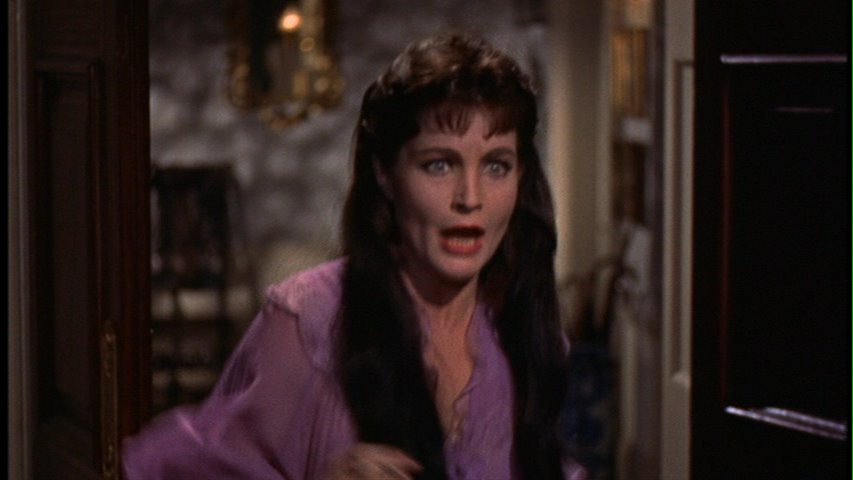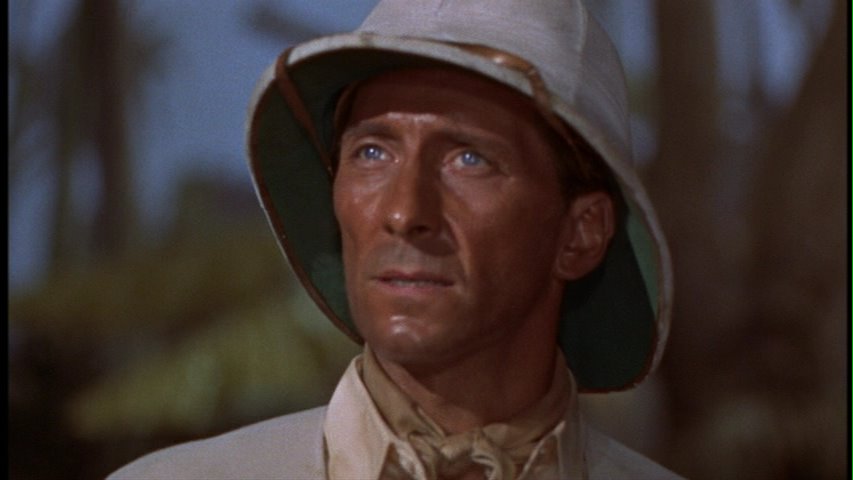
Warning: the following post is a spoiler for anyone planning to watch the 1959 version of the Mummy.
To review: Peter Cushing is the most competent Van Helsing and the cruelest Dr. Frankenstein to grace the screen. That brings us up to this installment. He’s also the greatest John Banning…ever. Remember the Bannings? Kharis sure as hell does.
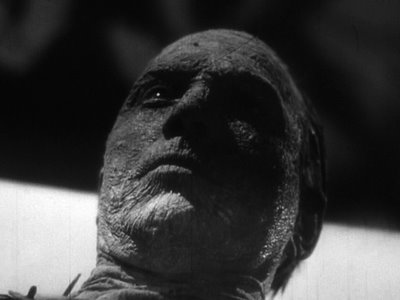 He spent a good chunk of the last century trying to hunt them down, first in Maplewood, USA and then later, in the Hammer films, at some posh neighborhood in England located conveniently near an insane asylum. I’m not sure where in England, exactly. It’s sort’ve like the village near Frankenstein’s castle – where was that exactly? The old ladies were English, the burgomaster was Prussian and the torch wielding mob, judging by their use of fire, must have been French. Viva la monster’s death!
But I digress. John Banning was on the expedition, but cot ridden and nursing a broken leg when his dad, Stephen Banning, violated Ananka’s tomb and read from the Scroll of Life, thus re-activating Christopher Lee’s acting career for another 88 minutes (is that a curse? I think not!). Kharis grabbed the scroll and Stephen Banning spent the rest of his life beside himself. That is until years later, back in England, when Kharis peeled off the bars of Stephens padded room and gave the old man a good choking.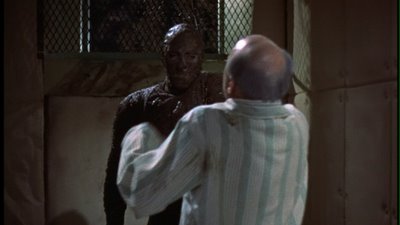 How did Kharis get to England? His handler....
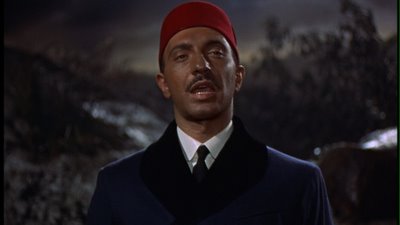 ...a sith like priest in the miniscule cult of Ananka, brought him in a casket marked “relics, just some old relics…nothing more.” He moved in to John’s neighborhood. And John Banning took a little time piecing it all together (a rare case of the deniability factor for Mr. Cushing, in fact, the only one I can think of if you don’t count Star Wars), but by the time the second murder happened – to another party of the expedition, he figured it out.
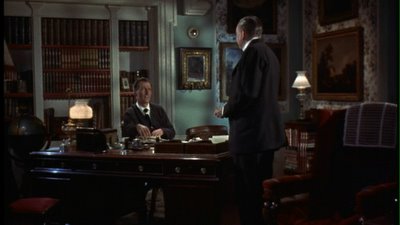


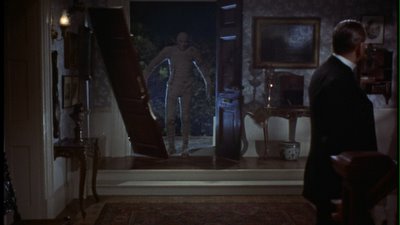
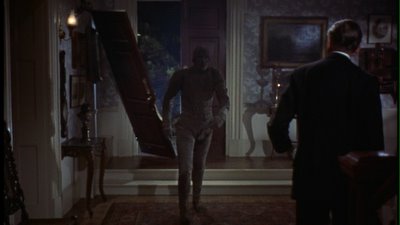
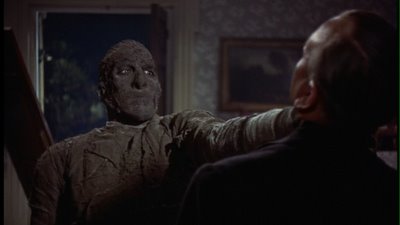 Notice how quickly Kharis gets from point A to point B. Like a man with a purpose. The Universal Kharis was often laughably slow. Not the Hammer mummy. Christopher Lee lumbers onward, straight to his prey. But he cannot multitask – and though the next night’s victim is there in the room, Kharis returns to his master. John fires his pistol….
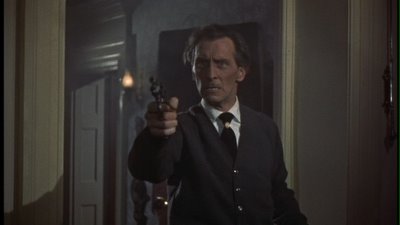 But the monster still moves?
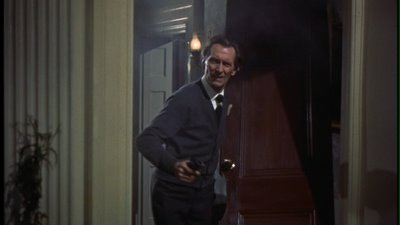 Peter Cushing is a master of props. In fact, one of his nicknames was Peter Props. He could fiddle with something or smoke a cigarette in a manner that seemed effortless and natural. He doesn’t come off as too self aware as most of the later method actors do. Personally, I like my Peter Cushing in a Victorian study with a glass of brandy and a gun cabinet. Which is why I like The Mummy.
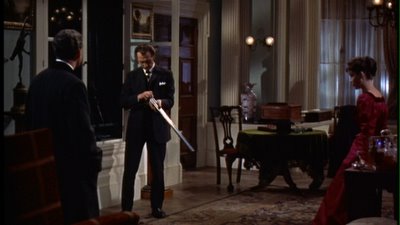
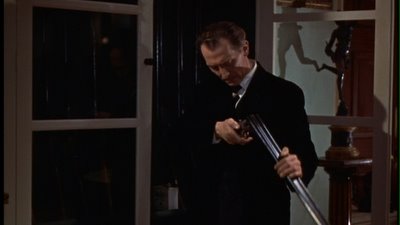 In most horror or sci-fi films, the bad guy or creature starts off in the film as being completely invulnerable and often excessively powerful. But two hours of a bad movie can drain the energy from anything and towards the end, the hero faces a drastically weakened creature, though presumably nothing has changed. The result is that the finale is often something that wasn’t remotely plausible at the beginning of the picture. That doesn’t happen in The Mummy. Kharis busts through the french doors of John Bannings study as quickly as he tore open the bars of his dad’s cell, and broke down the front door to get that other guy. Kharis is still quite unstoppable. But, when its John’s turn to die, he keeps his cool and does everything in his power to slow Kharis down – perhaps the fractions of a second will allow an opportunity to present itself.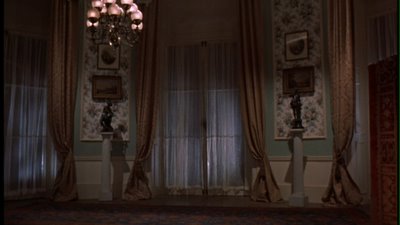
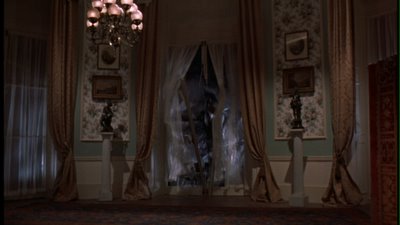
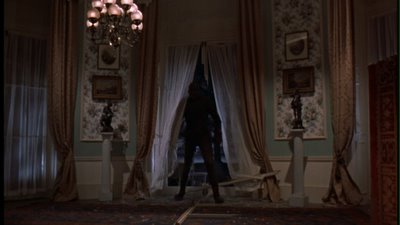
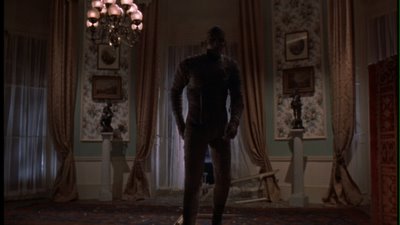 First, he blasts him twice with the shotgun
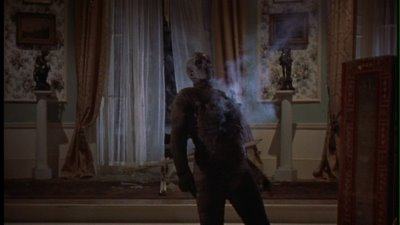
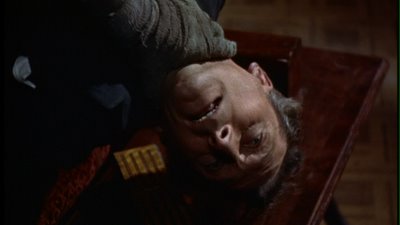
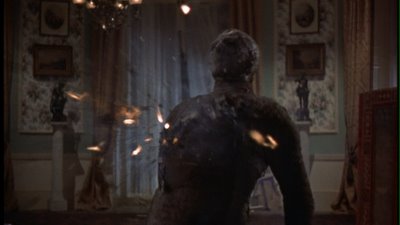 Kharis is still unstoppable - forcing John to strategically redeploy over his desk.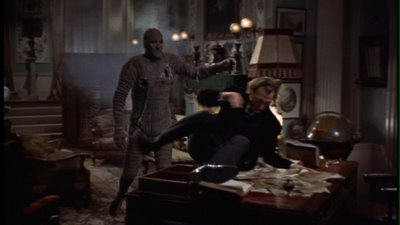
Peter Props makes excellent use of a harpoon.
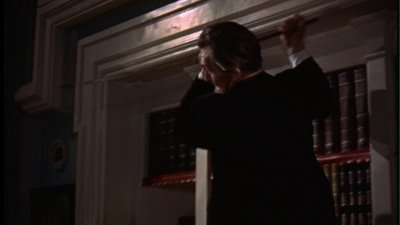
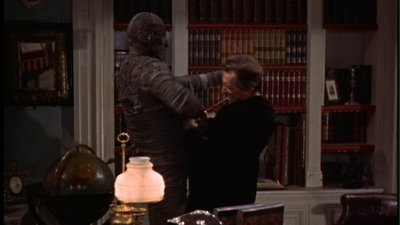 Yet, the bastard mummy is still unstoppable.
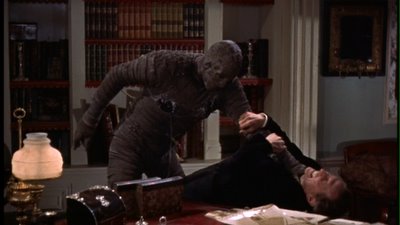 Until the opportunity stumbles in.

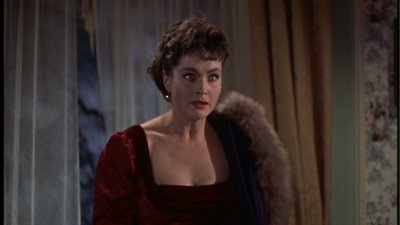
It never hurts if your wife is the spitting image of queen Ananka, which is why I added that to my eHarmony wish list.
Now most fellows would still be crapping in their britches after such a near death experience. But not John Banning. He goes to handler's house (once he figures where it is…just down the street)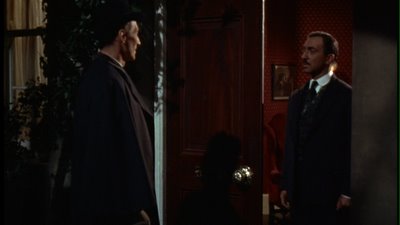 and craps on his religion instead – in a gentlemanly way, of course.
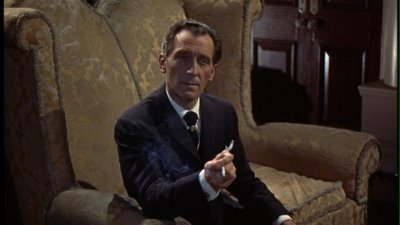 Which sets up a finale with more of this:
 And more of this:
 And this:
 The film has several weak spots in the script, but because of Terence Fisher's direction and the cast, particularly Peter Cushing, it weathers past those and is thoroughly entertaining.


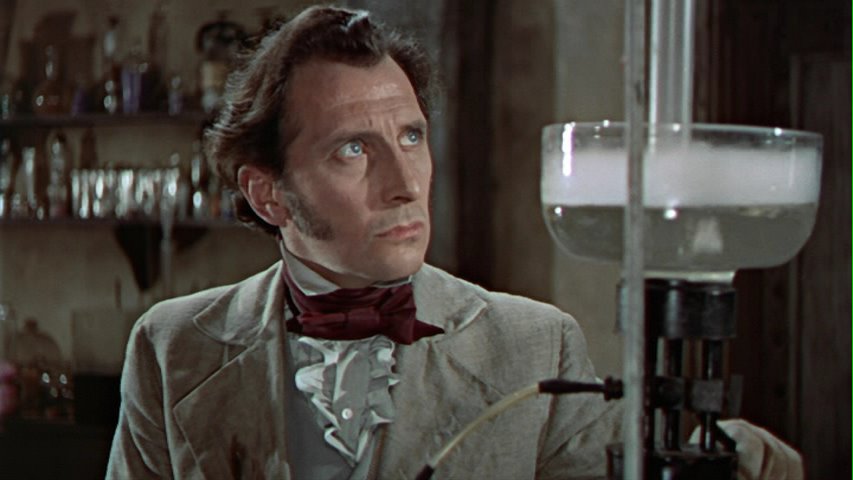

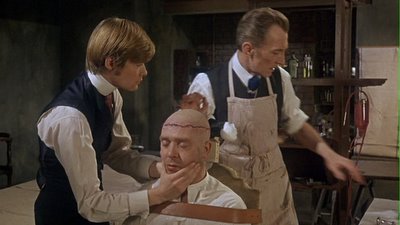
 Notice the calm in the Doctor/Baron’s demeanor. He has no intention of sharing their breakthrough with others. His purpose from the get-go was to create a man, as cursed and damned as you ever saw. His partner is horrified and refuses to take part, but that doesn’t stop the Doctor/Baron from proceeding, getting parts by hook or crook or sometimes……murder.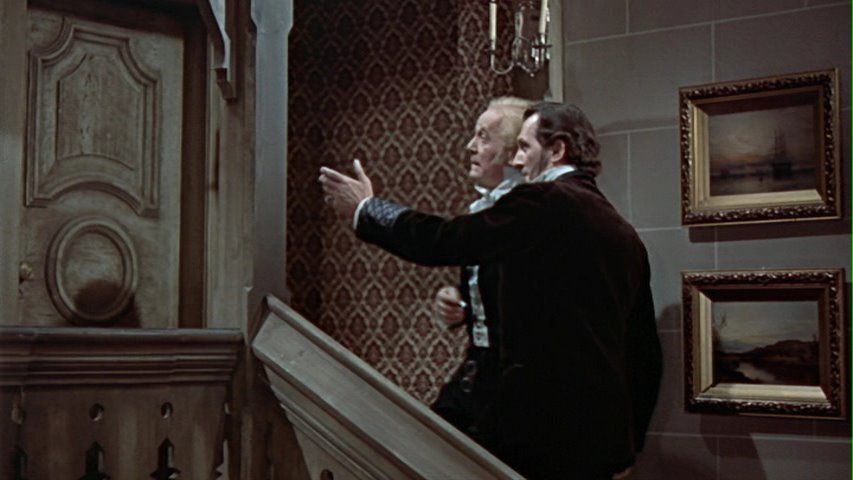
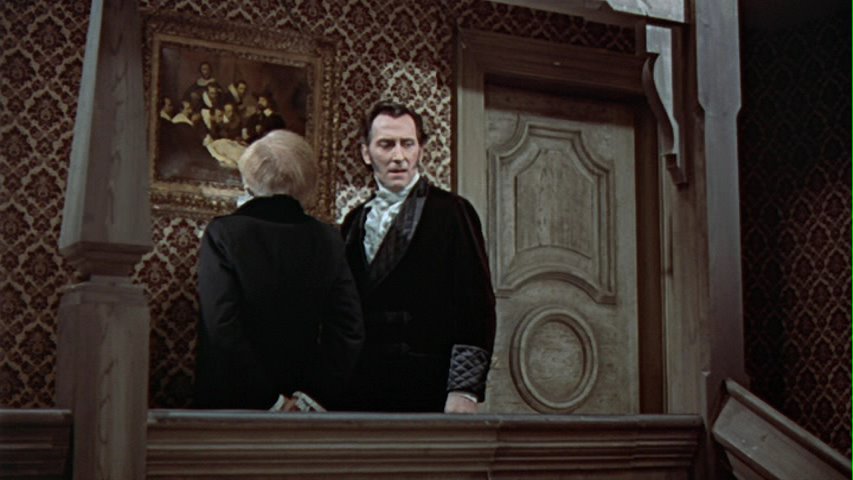
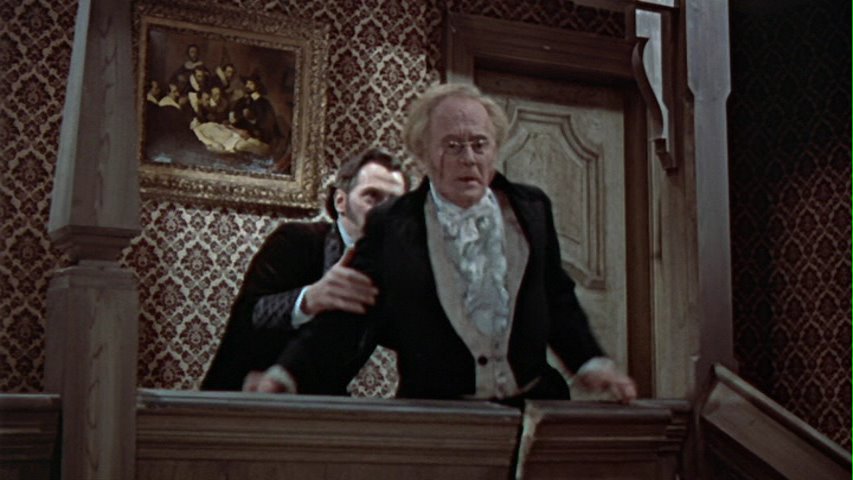

 He was going after that fella’s brain – which brings up a curious oversight. If you were after the professor’s noodle, then why kill him in a way that would smash the skull? Nevertheless, Peter Cushing plays the coldest most ruthless Frankenstein ever. He never frets about what he is doing or what he has done – but he’s always thinking about how to move forward.
 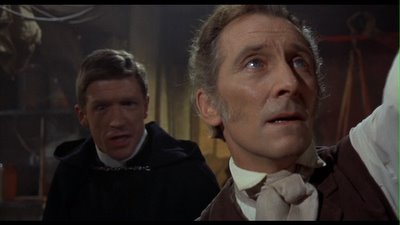 Notice how the local religious authority is outraged and confronting the doctor, yet the doctor is too busy with his work to pay him any mind.
 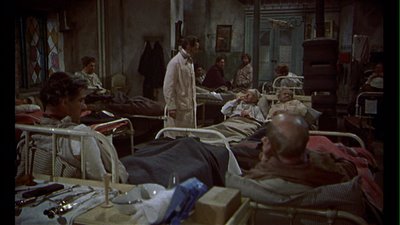 Even when he creates a hospital for the poor in Revenge of Frankenstein, his purpose remains singular – to create another man. The destitute patients merely provide a front for his nefarious activities, as well as a 24 hour pull-o-part.
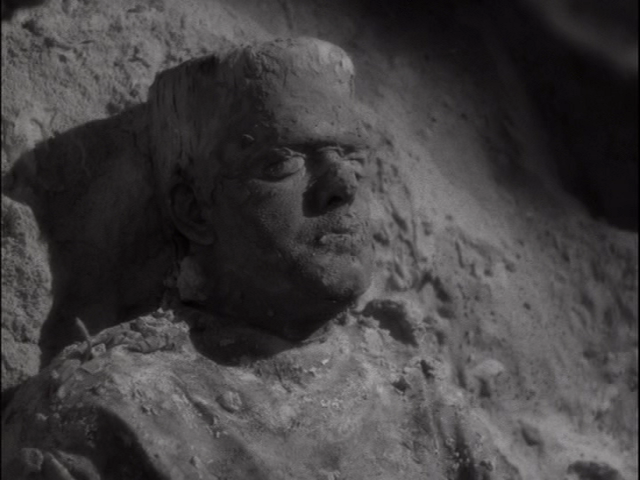
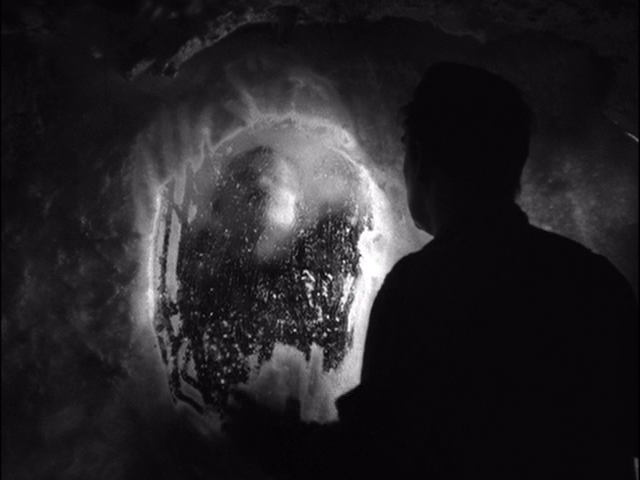

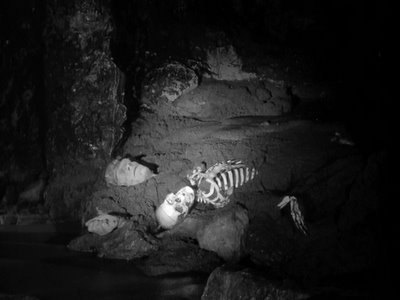

 What a ride!

 In true Universal fashion, the monster is like a re-heatable snack, recovered, yet again, from the ice. Tupperware is still trying to find the Doctor’s secret. (Incidentally, The Evil of Frankenstein may not be held in high esteem, but there's an excellent sequence when the Doctor/Baron recounts when he first created the monster.)


.jpg)