Showing posts with label Malick. Show all posts
Showing posts with label Malick. Show all posts
Thursday, April 13, 2006
The New World to get Smell-o-vision treatment in Japan
The movie was so clear in so many ways that I thought I was already smelling it, since all my senses were alive. Some of the scents seem a little silly, but it could be fun. If the Japanese theater is intent on expanding their smell-o-vision program, my top candidate for a proboscis pleasing re-release would be Tampopo. Actually, that movie just needs to be shown in a ramen shop. The least desired smell-o-vision candidate would be Kanal. I'm just not convinced that we have the technology to get the fecal aerosols right. (via Drudge)


Sunday, February 05, 2006
More movies, Mr. Malick
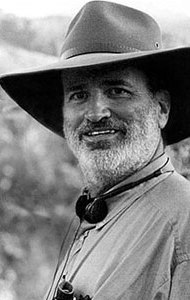 As Wagstaff mentioned, Terence Malick could do wonders with Typee, Omoo, Mardi and "The Encantadas" – the “Melville period” they would call it…that is, if he chose to do it. At Malick’s pace, that “period” would span several decades. Still, as I add on the following suggestions, I would urge Master Malick to work faster, please.
I figure, with The New World, he’s pretty much done Emerson.

Assuming it would be too much to ask Malick to direct a picture corresponding to each of Melville’s stories, he could concentrate on two periods of Melville’s life:
Part 1) the seafaring years – essentially Typee thru White Jacket – an adventerous period of whaling, jumping ship, living with cannibals, taking part in a mutiny, working at a bowling ally in the Sandwich Islands, hopping aboard a US Navy vessel around the cape and back home. Malick could pick from it like a seasoned old lady picks from a bountiful produce market. Good stuff, and lots of it.
Part 2) the Pittsfield years – roughly the period when he met Hawthorne and reworked Moby Dick up to the Piaza Tales and short stories around it. Malick would have ample opportunity to show lush leafy Massachusetts nature through any number of his autobiographical works – such as a picturesque hike he took with Hawthorne and some other literary friends up Mount Greylock. For the winter season, Malick could choose Melville’s visit to a paper factory in the "Tartarus of Maids". Just thinking of various episodes in Melville’s work as if it were in a Malick movie, will make one smile. I'd pay $8.50 to see his adaptation of Clarel.
When he’s through with Melville, he should do The Scarlet Letter up right – to make up for the damage done by Roland Joffé, Demi Moore and Gary Oldman. In fact, any Hawthorne Malick could spare us would be most appreciated. And then there’s salts like Conrad to tackle.
But back to reality….I just want more Malick movies – wherever they come from. Perhaps he’s been sitting on another script for decades, like he did with The New World. Please, please….
Tuesday, January 31, 2006
A Trip to The New World

Our good friend Edward Copeland has spent considerable energy building on his website a compendium of unfavorable reviews of The New World with lots of links to Terrence Malick's naysayers. I admit I find odd and a little curious the prosecutorial glee with which he marshals attacks on a movie he has no intention of seeing. It's one thing to want to tear down the accolades automatically given to the latest contrivance from the Coen Brothers, but Terrence Malick? I thought his critical reception had always been mixed at best, I never guessed his movies made much money, and the last I checked, Rotten Tomatoes had The New World's fresh rating at a mere 55%.
On the flip side, Matt Zoller Seitz has written about the film with eloquence, passion, and an almost missionary zeal at The House Next Door. His praise and enthusiasm for the film feels infectious, if a tad hyperbolic at times. And I don't know what to make of such talk of "new cinematic languages" or "watershed cultural moments" and the like.
It was with these dueling opinions in mind, that my brother and I geared up for our journey to The New World last Sunday. During the smoke'em-if-you-got'em moments before the movie started we discussed as we have many times The Thin Red Line. My brother thinks it an absolute masterpiece, and I deeply admire large portions of it, but want to reign in a little, due to an overall disjointedness and what I felt at the end was either some clumsiness or a deliberate but needless and obfuscating ambiguity. But mostly when we talk of TTRL we talk about the way a match lights up the darkness, or how we first hear a diesel engine throb and then see a patrol boat through the trees cruising along the shore, or the way the brig really feels encased in thick steel deep within the ship's bowels.
"Terrence Malick knows how to film water", one of us will say, or "Terrence Malick knows how to film shoreline... how to film trees".
"Malick knows how to make the interior of a ship hum."
And then always there's the photography. To say that a Terrence Malick film looks good is an injustice. It's quite simply the best cinematography there is.
As we were walking through the multiplex, one of us noticed that we were both dressed a bit nicer than casual for some reason. "Gee, I do kind of feel like I'm going to church here."
"I think you'll like the service", I said.
"But will I like the people?" he replied. We went in and sat down.
And now that I've seen it, all I can say is: Wow, was Matt Seitz ever right and Ed Copeland wrong! It's a great big magnificent cathedral of a movie. It's an excavation, a digging down and a clearing away, it's a cleansing return to our creationist mythology. It's less a movie in any traditional sense, and more an object presented for meditation.
It's all here, of course, all that stuff that Malick's detractors find so worthy of mockery: the symphonic snippets of colloquial narration, the slow lyrical pacing, the hippie-trippy cutaways to trees, water, rocks, and birds. But I'm beginning to think this kind of ridicule is getting cheap and too easy. Here, let me try it:
What am I doing here?...how am I watching this movie?...is this a dream?...no ... this only is real...everything else is a dream...
Terrence Malick is one of the greatest filmers of nature ever. Like some japanese master, like an Inigaki, his nature inserts flow and pervade. What is background in other movies Malick puts front and center. Malick is the man to film Typee. And Omoo. And The Encantadas. Or all of Melville while he's at it. Or anything with a boat- or water- or trees- or a river.
I struggle to find other films to compare to The New World. Maybe Kurosawa's great film Dersu Uzala or Agnes Varda's Le Bonheur. I understand likening it to 2001: A Space Odyssey but Kubrick yanks our chain and dicks the audience around a bit ( shaggy God story and all of that.) There is none of that here. We are never lost in The New World, everything is up front, we feel we know exactly what it all means.
Perhaps it's easiest to describe it in terms and ideas borne out of Malick's previous work, especially the film it most resembles, The Thin Red Line. If you take the AWOL sections of that film, with James Caviezel roaming around and taking the jungle and islanders all in with those big, soulful, world-reflecting eyes ( I pegged him as an actor to play Jesus back in '98), add to it some stuff like the Ben Chaplin character's totemic sexual recollections of his wife, and mix it all with Malick's camera looking at everything like it has some sort of special Buddha lens attached to it, then we might approximate the movie we have here.
Terrence Malick is one of the greatest filmers of nature ever. Like some japanese master, like an Inigaki, his nature inserts flow and pervade. What is background in other movies Malick puts front and center. Malick is the man to film Typee. And Omoo. And The Encantadas. Or all of Melville while he's at it. Or anything with a boat- or water- or trees- or a river.
I struggle to find other films to compare to The New World. Maybe Kurosawa's great film Dersu Uzala or Agnes Varda's Le Bonheur. I understand likening it to 2001: A Space Odyssey but Kubrick yanks our chain and dicks the audience around a bit ( shaggy God story and all of that.) There is none of that here. We are never lost in The New World, everything is up front, we feel we know exactly what it all means.
Perhaps it's easiest to describe it in terms and ideas borne out of Malick's previous work, especially the film it most resembles, The Thin Red Line. If you take the AWOL sections of that film, with James Caviezel roaming around and taking the jungle and islanders all in with those big, soulful, world-reflecting eyes ( I pegged him as an actor to play Jesus back in '98), add to it some stuff like the Ben Chaplin character's totemic sexual recollections of his wife, and mix it all with Malick's camera looking at everything like it has some sort of special Buddha lens attached to it, then we might approximate the movie we have here.
Now I'm a little confused as to which cut of the movie I saw, and I need to read up on the different versions, but this one felt brief and incredibly tight. The characters were spare, the storyline was tidy and simple. ( Did I mention the movie is tight?)
With most novels and lots of movies, I think I enjoy them best after the fact. Once downloaded, I can take it apart and put it back together in my head, spin it around and examine it from different angles. Not so with a Malick film. The best time and place for his movies is in the dark, letting the images and sounds wash over you. Like a great piece of music, it's not enough that we can remember it or even sing it, we need to actually hear it again.
Just take the opening sequence, with our settlers getting their first glimpse of land, and the natives stopping to see the mysterious ships gliding into harbor, the music, serene yet always rising, the skillful weaving of multiple vantage points done with an exhilarating perfection, John Smith in chains, looking up at a small square of blue sky, with it's intimations of a new liberty ... if this isn't great filmaking then I don't know what is! I felt all tingly while watching it.
Or how about Pocahontas's trip to England. We disembark at a dingy portside, the squalor of which makes us wonder if she'll ever be impressed. We progress down cluttered streets, and pass buildings that grow increasingly more grand and imposing, until finally ( in a scene that echoes John Smith's entrance into Chief Powhatan's hall ) we enter the court of King James, sumptuous yet cramped somehow, and very real looking.
The performers are all good. Q'orianka Kilcher as Pocahontas is an especially sweet discovery. When one of the white woman settlers takes our princess under her wing and has her wash her face, my brother quipped, " Nobody in this movie needs to be giving any pointers to Pocahontas on skin care, that's for damn sure." Colin Farrell as John Smith completely overcomes whatever prejudice I have against him. Christian Bale as John Rolfe is fine as always. In truth, though, I think that this movie could be recast a couple of times over and it wouldn't change very much. I might fight a bit harder to keep Christopher Plummer, whose very voice and demeanor conveys in the godforsaken Jamestown settlement the comfort and assurance of centuries of western civilization.
Now I can't honestly say I've ever really cried much at the movies, ( and as an insurance policy I never watch anything where something horrible befalls a child, as I know I can't handle it) but somewhere during the last reel of this one, what with that Wagner music swelling, and the wind gusts blowing in ( you can almost smell the salt) and Pocahontas chasing after her little son across the lawns and along the hedges, and that hide-and-seek camerawork, it all got to working on me and I welled up and sat misty-eyed right through to the end, with its final shot so perfect and apt and unmistakably clear in its poetry.
The New World bore through me in an emotional way that few films have. I think it reaches the summit of film art. And it will take its place there, and join in my moviegoer's heart with other films cherished for the humbled awe I feel when witnessing something de profundis. With the bottom-dropped-out heartache I felt watching two condemned men reach for each other's hands instinctively as they walked to their execution in Breaker Morant, with the gratitude that I owe F.W. Murnau for providing Sunrise with a happy ending, with the dumbfounded, quivering mass of mixed emotions that I turn into if I even start thinking about Rossellini's great masterpiece Paisan.
The human story here is affecting, but I don't think that's what got to me. It's something else. It's not like, say, some italian neorealist film, whereupon leaving we rejoice and want to shout across the rooftops " Now That's Humanism!" No, it's something else, something profound and metaphysical. Something Zen like, and to do with the individual's relation to reality. Throughout this movie we always feel the weight of future generations, and in our mind's eye we superimpose the country and people we know today onto the tracts of wilderness.
To conclude, I'll just have to say thank you Matt Seitz, for your evangelism. The church service was exceptional and the people good. And Mr. Copeland, I urge you to attend this movie. You may indeed find it boring and not like it, in which case we'll examine your head in Part Two. Here I'll end with the only words my brother and I could muster as we left the theater and made the long walk to the car, the only words, that is, until we got home and started bouncing around saying how fucking awesome it was.
" Terrence Malick knows how to make an old ship creak."
" Hell, man, Malick knows how to make a creek creak."
Now I can't honestly say I've ever really cried much at the movies, ( and as an insurance policy I never watch anything where something horrible befalls a child, as I know I can't handle it) but somewhere during the last reel of this one, what with that Wagner music swelling, and the wind gusts blowing in ( you can almost smell the salt) and Pocahontas chasing after her little son across the lawns and along the hedges, and that hide-and-seek camerawork, it all got to working on me and I welled up and sat misty-eyed right through to the end, with its final shot so perfect and apt and unmistakably clear in its poetry.
The New World bore through me in an emotional way that few films have. I think it reaches the summit of film art. And it will take its place there, and join in my moviegoer's heart with other films cherished for the humbled awe I feel when witnessing something de profundis. With the bottom-dropped-out heartache I felt watching two condemned men reach for each other's hands instinctively as they walked to their execution in Breaker Morant, with the gratitude that I owe F.W. Murnau for providing Sunrise with a happy ending, with the dumbfounded, quivering mass of mixed emotions that I turn into if I even start thinking about Rossellini's great masterpiece Paisan.
The human story here is affecting, but I don't think that's what got to me. It's something else. It's not like, say, some italian neorealist film, whereupon leaving we rejoice and want to shout across the rooftops " Now That's Humanism!" No, it's something else, something profound and metaphysical. Something Zen like, and to do with the individual's relation to reality. Throughout this movie we always feel the weight of future generations, and in our mind's eye we superimpose the country and people we know today onto the tracts of wilderness.
To conclude, I'll just have to say thank you Matt Seitz, for your evangelism. The church service was exceptional and the people good. And Mr. Copeland, I urge you to attend this movie. You may indeed find it boring and not like it, in which case we'll examine your head in Part Two. Here I'll end with the only words my brother and I could muster as we left the theater and made the long walk to the car, the only words, that is, until we got home and started bouncing around saying how fucking awesome it was.
" Terrence Malick knows how to make an old ship creak."
" Hell, man, Malick knows how to make a creek creak."
Subscribe to:
Posts (Atom)


.jpg)


